

Alameda County is widely regarded as a dynamic scene for food and arts, but it also faces significant public safety issues. According to findings from the Alameda County Board of Supervisors, the county has the third highest reported volume of human trafficking victims in the United States. Among identified victims in the county, 61 percent are identified as African American, 15 percent Latino and 12 percent Caucasian, with more than 55 percent having been in the foster care system at some point in their lives.
Human trafficking is a form of modern-day slavery used to exploit youth and adults for sex acts or labor through coercion, fraud, and manipulation. Any person under the age of 18 who engages in commercial sex, more commonly known as prostitution, is considered a trafficking victim. Methods of control can range from physical to psychological, and from subtle to blatant. Traffickers may also use violence, threats, debt bondage or lies to keep control of their victims.
In Oakland alone, studies from the Center for Justice Innovation suggest that an estimated 100 minors are sexually exploited on any given night, but this number may be much higher. This has led the FBI to designate the San Francisco Bay Area as a “high intensity child prostitution” region.
The available data regarding victims of human trafficking underrepresents true numbers due to the secrecy of human trafficking and flaws in screening systems. Furthermore, some may not come forward as victims because they may not understand what happened to them, while others harbor shame or fear of retaliation.
Local stories
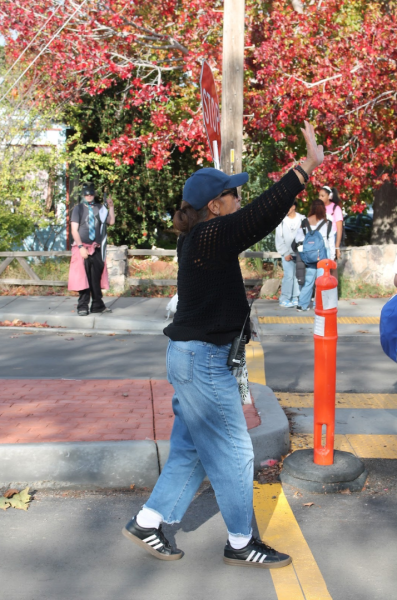
Francis Kahuanui-Johnson, Encinal’s school nurse, is well known across campus for her kindness and the snacks she provides hungry students. She stands at the crosswalk every morning, helping keep Encinal students safe. Over the course of her career, Johnson has known Encinal students that were drawn into the cycle of human trafficking.
“Some of [the students] were kind of forced to make ends meet for their own existence. The other ones got stuck in it and they didn’t know how to get out,” Ms. Francis said.
At first, the families of these students thought their children prostituted because they wanted more than what their family could provide.
“And then I did hear that some of them, by the time they were sophomores and juniors, were working the streets, doing things for other people, not just for their own existence… One of the other girls got caught in the, this what I can do for you, work for me, [situation]. I do believe she might even still be [prostituting]” said Ms. Francis.
When these students were first coaxed into sexual exploitation, they were in the first Encinal eighth grade class that Ms. Francis worked with. Today, they are nearing 40 years old.
These students were first coaxed into sexual exploitation while in 8th grade. Today, they would be nearing 40 years old.
An East Bay police officer shared another story about the rescue of a 14-year-old human trafficking victim referred to as Jennifer (to protect the victim’s privacy). Jennifer had been missing from her home in Los Angeles for six months before police found her.
“We got in contact with Jennifer at a motel when a staff member called to ask us to check in on her. She said she was with a friend who she gave the name of but wasn’t there” said the officer. This “friend” turned out to be her trafficker. They continued, “After further questioning, we learned that she was being trafficked for sex.”
Jennifer was unsure of what would happen next and was terrified that her trafficker would harm her for talking to the police.
“We gave her to social workers, took her to the doctor, and then handed her to child services who reunited her with her family… In the end, she was grateful to get the help,” the officer added.
They believe that Jennifer initially met this person through social media.

What to look out for
Online, traffickers hide behind realistic social media accounts, dating profiles, or pose as employment agencies. Sometimes, traffickers will threaten to start rumors and share intimate pictures of their victims online. Traffickers may also come in the form of lovers, coworkers or employers, friends, and family members.
According to advocates, key signs to watch for from potential traffickers include financial or education-related offers that seem too good to be true; attempts to isolate you from your support systems (family, friends, etc.); vague or inconsistent details about their life; pressure to engage in illegal or uncomfortable activities; taking control of personal documents and finances; control over your actions; showering you with lavish gifts to gain trust; and intense, fast-paced romantic relationships where they express immediate love or disguise coercion and control as affection.
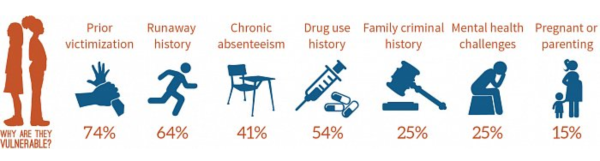
While victims can come from any background, they most often have experienced abuse, neglect, poverty, unstable family situations, mental health concerns, and isolation from family or friends. Runaways or youth who have been involved in the juvenile justice or child welfare system are also at a heightened risk. Traffickers identify these as vulnerabilities that they can use to exploit with promises of a better life, stability, job, or love.
Some warning signs that a minor is being trafficked include relationships with older and overly protective significant others, rehearsed responses in social interactions, looking to others for permission to speak or letting others speak for them, a sudden increase in expensive possessions (cash, clothes, jewelry, multiple cell phones, etc.), tattoos or branding that can’t be explained, malnourishment, sudden and withdrawn behavior, and signs of physical injury or abuse.
If you suspect an online trafficking attempt, disengage immediately, block and report, and take a screenshot. If you believe you are being trafficked or want to report a victim of human trafficking:
- Call 911
- Call the National Human Trafficking Hotline at 1-888-373-7888
- Call the Alameda Health System’s Sexual Assault Response and Recovery Team (SARRT) at (510) 534-9290
- Text “HELP” or “INFO” to 233733.
Find more human trafficking resources for Alameda County here.