






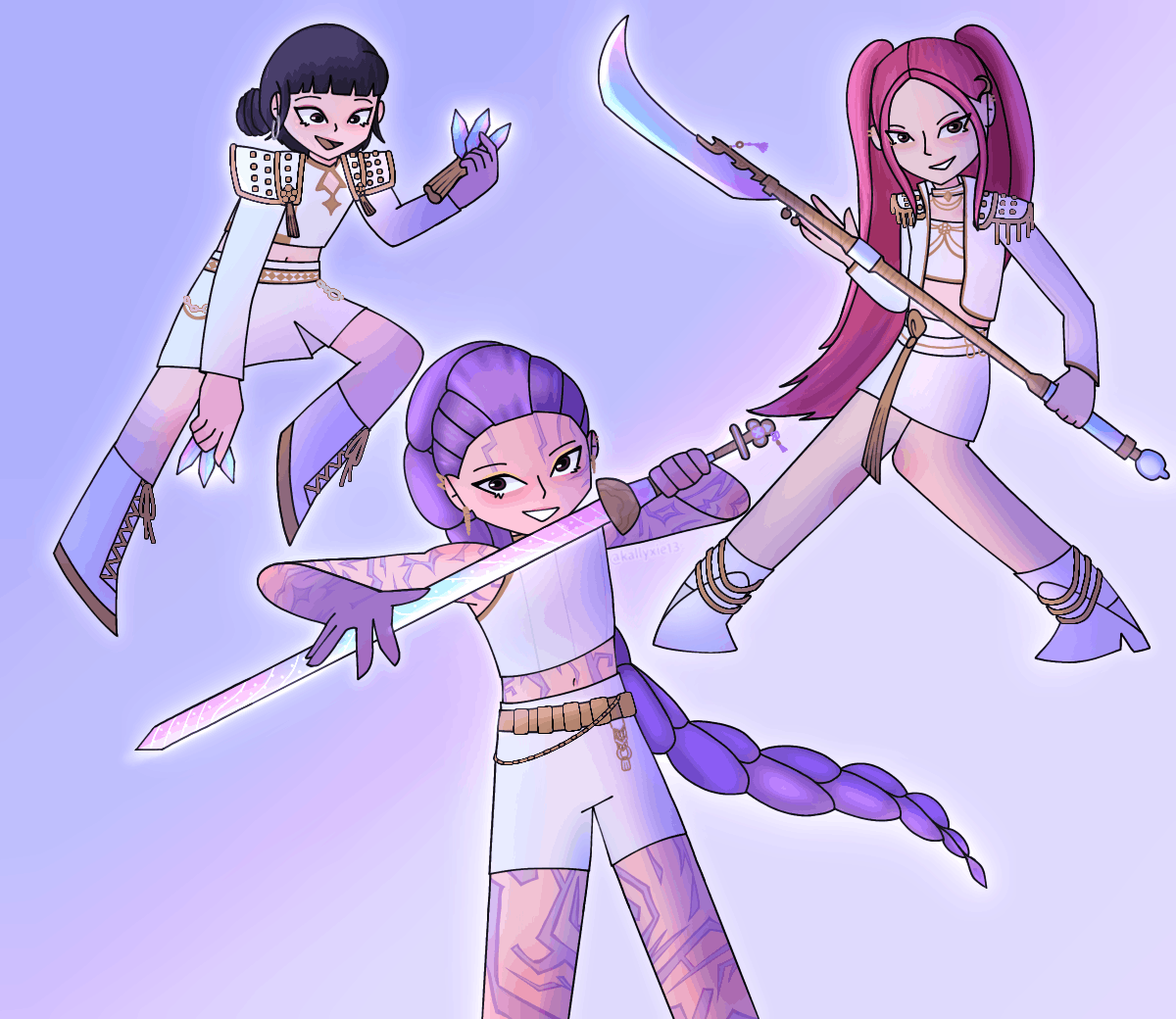
Movies that have been produced recently haven’t been the same in terms of good writing, especially in regards to pacing, structure, and storytelling. However, I feel that the film KPop Demon Hunters perfectly captures all three points. This specific movie has skyrocketed in popularity, achieving #1 on Netflix with over 236 million views, and for good reason. In addition, the movie has already won several record-breaking awards.
KPop Demon Hunters was directed by Maggie Kang and Chris Appelhans who provided their audience with breathtaking media when it was released on August 23, 2025. The idea of the film stems from self-acceptance, resilience, and finding strength in community.
These themes were what really captured my attention, especially with how they were presented through the characters and songs. By understanding the movie’s narrative, the songs’ symbolism, and the characters embracing their imperfections and true selves, it can help individuals understand their own insecurities.
While the concept may seem silly, the execution of it was done in a way that touches numerous fans’ hearts. This includes mine, the main characters just being themselves immediately having a large impact on how I view myself.
Like many types of media, it follows an arc of how one of the characters doesn’t fit in with the others. As a result, it causes them to hide their true selves, too scared to reveal what they’re keeping silent about. This writing can furthermore be forced upon secondary characters.
In spite of it being a very popular narrative, this type of plot has been used to the point of exhaustion. Other types of media barely reach the themes of the key points. But in KPop Demon Hunters, they’ve written the story to feel more realistic. The film portrays insecurities as something people actually have to fight against, whether it’s against years of bottlement or against a few months of fear. Although the characters had different worries, most of them really felt like someone I could see myself in.
KPop Demon Hunters really hits close to home, specifically in regards to what all of the characters had to go through until their final battle is over. Whether they felt comfortable sharing their individual insecurities or not, their uncertainty pulled them deep underwater to suffocate in. This type of feeling lessens the trust and communication between many, something I continue to feel for the longest time.
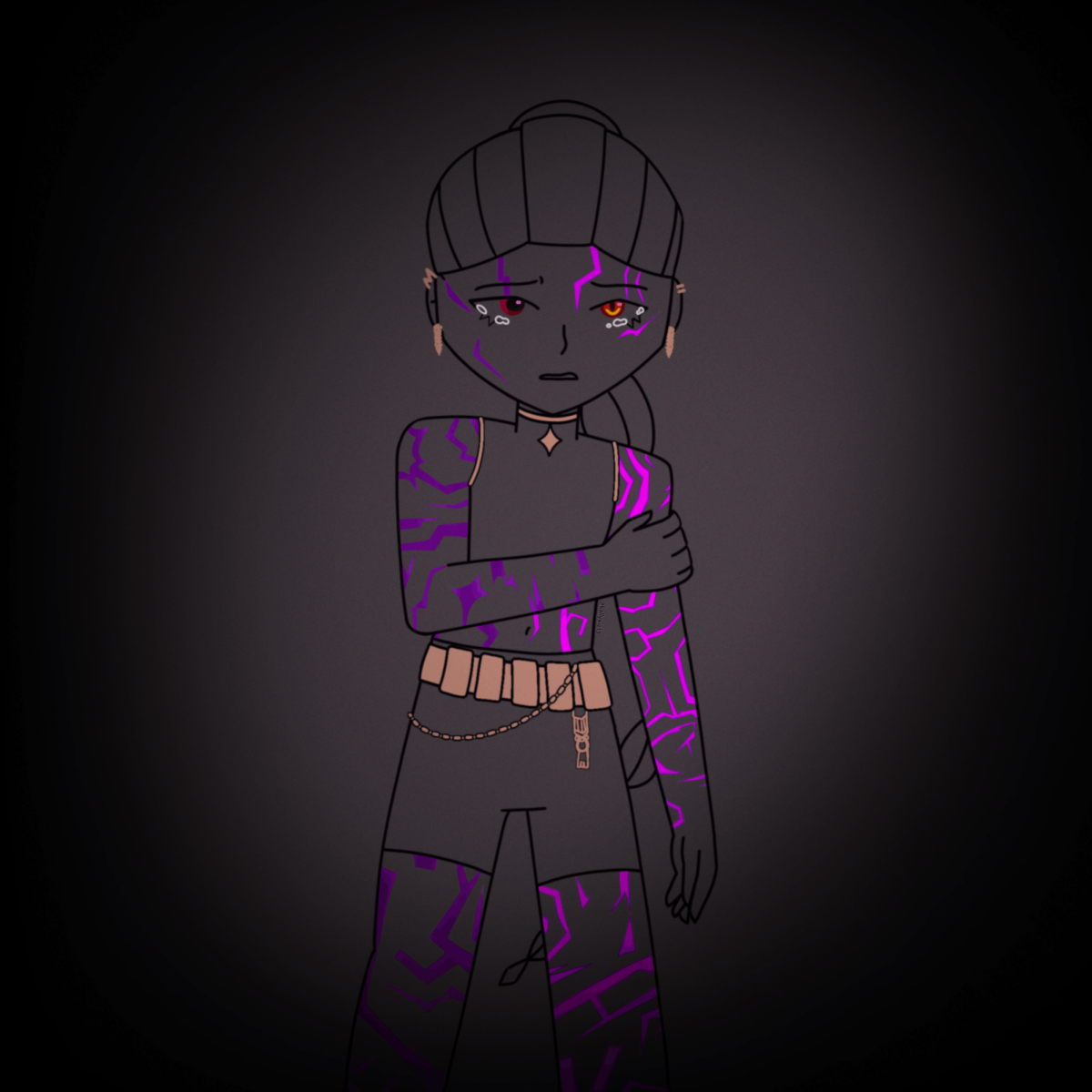
While most of the characters are a black sheep in their own ways, the main outcast is Rumi Kang. Rumi’s striped patterns represent her insecurities, something she’s ashamed to have. This is brought up in the beginning of the movie in the song, Golden.
As she hides in her own changing room away from Mira and Zoey, she sings “Waited so long to break these walls down, to wake up and feel like me.” The conservation of one’s emotions are strong, worsening the negativity they feel already. It really shows how much the film understands the characters and fans.
Rumi’s likely the character that connects with the audience most, especially since she’s the protagonist who are usually written to show a part of the viewer to themselves. The writers were able to portray her insecurities in such a beautiful symbolic way, a way that can both be taken physically, emotionally, and/or mentally.
Mira is also a black sheep herself. But more widely speaking, in the song Golden, her lyrics specifies “Called a problem child cause I got too wild.” The visuals display her with her family, except she’s sat in the middle and not at all minding showing off her free-spirit. This not only reflects Mira’s backstory of being an outcast, but also her personality and fighting style.
Her exterior displays a blunt personality, but she’s still shown to have a confident and caring side. Throughout the movie, the storytelling puts this into good use when it comes to talking with Rumi. She’s the one that more obviously can tell Rumi is hiding something. Furthermore, because of how blunt she is, she speaks out her truth about the situation, even along with Zoey when things get more chaotic.
Mira’s own insecurity is highlighted when Gwi-Ma controls her during their lowest point. “You thought you found a family? You don’t deserve one. You never have.” Mira’s fear of losing Rumi and Zoey really shows off just how strong her own trauma can be.
The writers did amazing creating a character that can emotionally connect with the protagonist, even with their own walls. Mira had to put up with not just her past of already being an outcast, but figuring out why Rumi had felt like one too. It’s clear she sets up walls when they had gone to get the tonics, but they’re not as silent as Rumi’s. So her giving in to her own insecurities displays just how much someone as blunt and free-spirited as her can have their own problems.
Lastly, Zoey is Huntrix’s youngest member. She’s half American and half Korean. This fact about her is also mentioned in Golden. In the visuals, she’s pulled by both of her guardians in opposite directions as she sings “I lived two lives, tried to play both sides, but I couldn’t find my own place.” This also reflects her sense of being an outcast and her identity.
Zoey is more open with her feelings, showing not just expressive support and affection to her friends, but also her chaotic side. Because of this, she seems more emotionally connected, even while distracted by how attractive the Saja Boys are. Furthermore, despite being bullied before officially moving to Korea, her love of writing music likely kept her spirits up.
The writers likely wrote her into an easily loveable character to balance out Rumi and Mira. The dynamics of their friendship fits into their problems, with Zoey being more understanding towards Rumi. She willingly suggests and attempts to rip up her notebook with Takedown in it despite being disappointed about how Rumi dislikes the song of insults. This alone shows just how much she cares.
As the youngest, she’s often shown to follow Rumi and Mira’s lead. Both of them are her best friends. But with the whole group falling apart, Zoey is left behind, lost and confused as to why Rumi had disappeared and Mira distancing herself to follow Gwi-Ma’s voice. She’s the last to hear Gwi-Ma’s manipulative words, “You’re too much, and not enough. You’ll never belong anywhere. But I can give you a place to belong.” Her insecurities also traps her in a state of a trance, following in a large crowd of fans while separated from all of her friends.
Zoey’s experiences as an outcast at school connects to wanting company. She’s finally given the friends she deserves from becoming a demon hunter. Furthermore, she’s treated normally, her race not at all being something that separates her completely from everyone else. She may not also be emotionally stable, but she easily emotionally connects with others. There’s so many scenes of her being able to be herself while loving and being loved. It’s something that really highlights her own struggles and personality.
But something to note about this article alone is how it’s only the tip of the iceberg. There’s so much more elements to show along with the characters themselves. Specifically speaking, the songs’ symbolism and the many record-breaking awards KPop Demon Hunters has won. And even as the movie continues to be constantly watched by many, there are always new details to find and new ideas to think about and analyze.