


















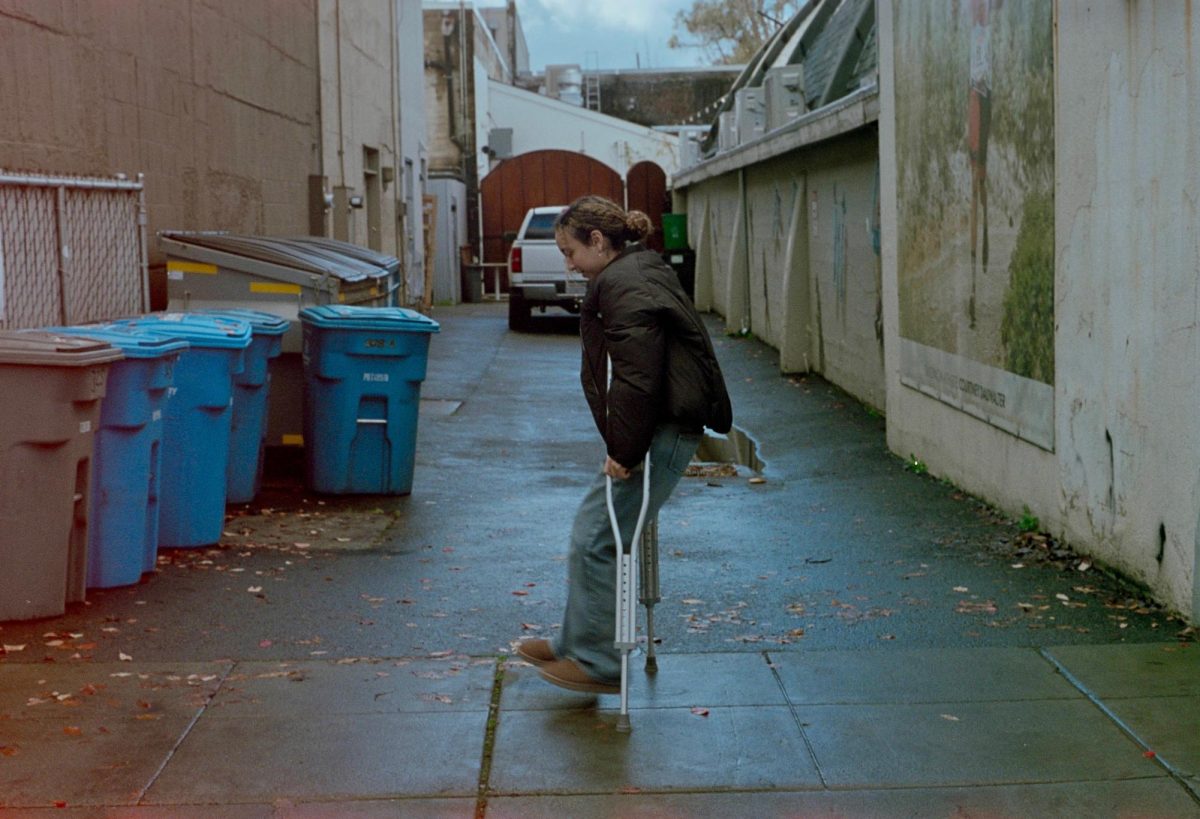
Every day hundreds of students walk through the halls of Encinal high school, one foot in front of the other without much thought. Their feet carry them effortlessly from class to class. Yet, of the school population, at any given time there are a few students who have injuries or disabilities that leave them relying on crutches or other mobility aids.
Those students are protected by the Americans with Disabilities Act (ADA). The ADA is a federal civil rights law enforced by the U.S. Department of Justice. It’s in place to prohibit discrimination against people with disabilities in all areas of public life, including employment, transportation, public accommodations, and government services. It creates specific accessibility requirements establishments have to meet by law, ensuring those with disabilities have the same opportunities as everyone else.
The ADA protects anyone whose physical or mental impairment limits major life activities, this includes people diagnosed with cancer, diabetes, post traumatic stress disorder (PTSD), HIV, autism, cerebral palsy, deafness/hearing loss, and blindness/low vision among others.
While the ADA is often associated with permanent disabilities, its protections extend to temporary ones as well. People with temporary disabilities such as injuries were not protected by the ADA until a prominent court case in 2014 called Summers v. Altarum Institute Corporation. The court decided in favor of a framework for new policy: “Temporary disabilities require only temporary accommodations.” This means that during the period when a person is impaired by the injury, they can benefit from the ADA’s accommodations. Once the injury has healed and no longer affects their lives, they no longer qualify.
For those students at Encinal who suffer significant injuries, getting from class to class is difficult, each step more deliberate. It’s frustrating to adjust to the limitations an injury may bring. These students are left relying on support from their classmates and staff to navigate the campus.
Freshman Enzi Otieku, who tore his meniscus playing baseball, shares his experience, “I have a little extra time to get to class and my friends carry my bag to me.” When asked how flexible his teachers have been he said, “They’re pretty understanding. They know that it takes a while to get around.”
In my experience as a gymnast who tore my meniscus in both my knees, the staff and teachers at Encinal have been great. Tardies were excused if I was slow to class because of the cumbersome crutches. I was often given the opportunity to leave class early to avoid crowded halls that could cause a fall and aggravate the injury. Getting assistance carrying bags is also offered if students coordinate with office staff. This is helpful as many students’ classes require them to carry around lots of textbooks throughout the day. If they’re recently injured, I would advise students to talk to Nurse Frances in the office, and she will alert their teachers and get any tardies they may receive excused, as well as handle access to the elevator for classes in the upper 200 building.
No difficulties with the accessibility of Encinal have anything to do with the amazingly supportive faculty. Where issues start to arise is with the buildings themselves. There are no automatic doors in the 200 building. This causes a problem when someone who is on crutches is navigating campus alone and needs to get through the door. The door closers stall most of the doors so average students can maneuver through, but with injuries, it’s significantly harder to do so and additional time is needed.
Despite this inconvenience, the ADA does not require buildings to have automatic doors, so long as they comply with the other requirements they are deemed accessible.
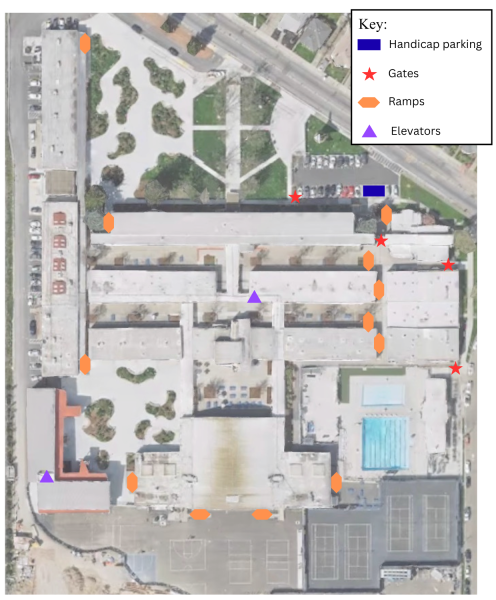
People with leg injuries often need to use the elevator in the 200 building to get to their classes upstairs. Students gain access to the elevator by coordinating with Nurse Frances about when they’ll need it. The elevator works great and is very effective for people unable to take the stairs. The only issue is that students are not given a key to the elevator. This is understandable because there are cases where it could be misused. But this means that if a student needs to get to or from the second floor they are stranded if no one with a key is nearby.
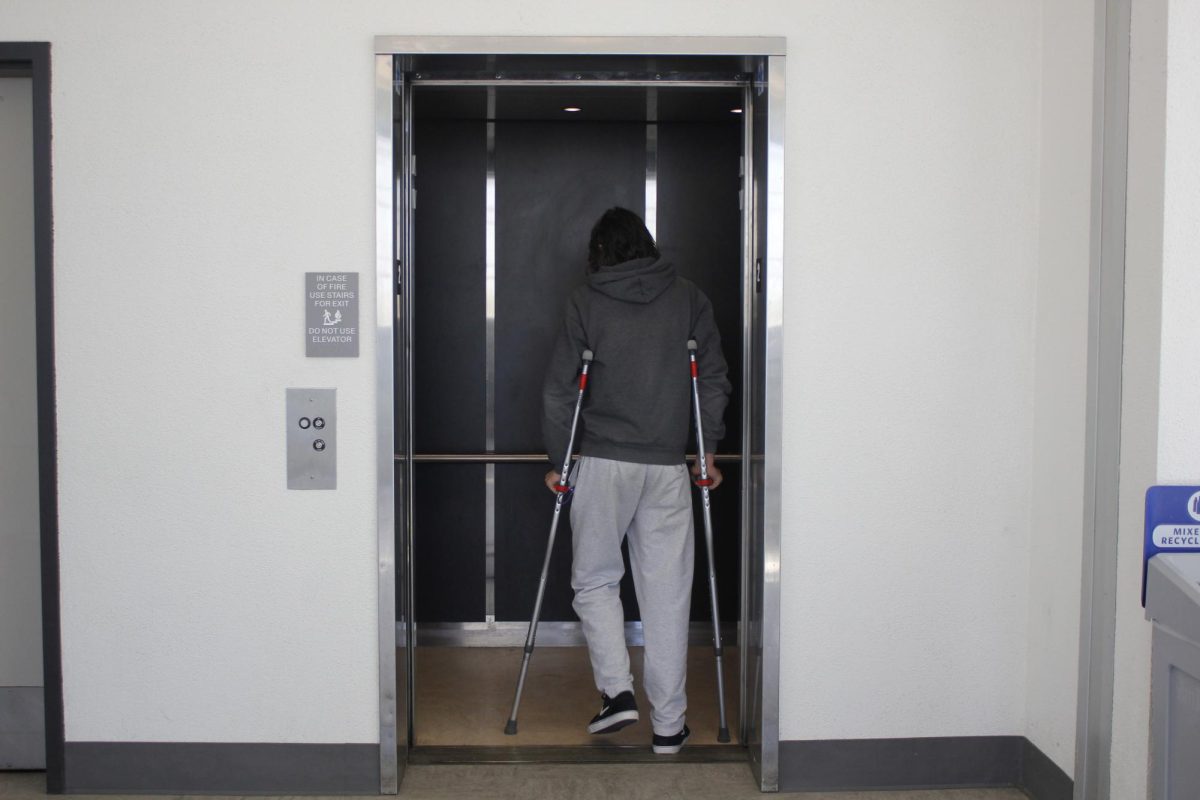
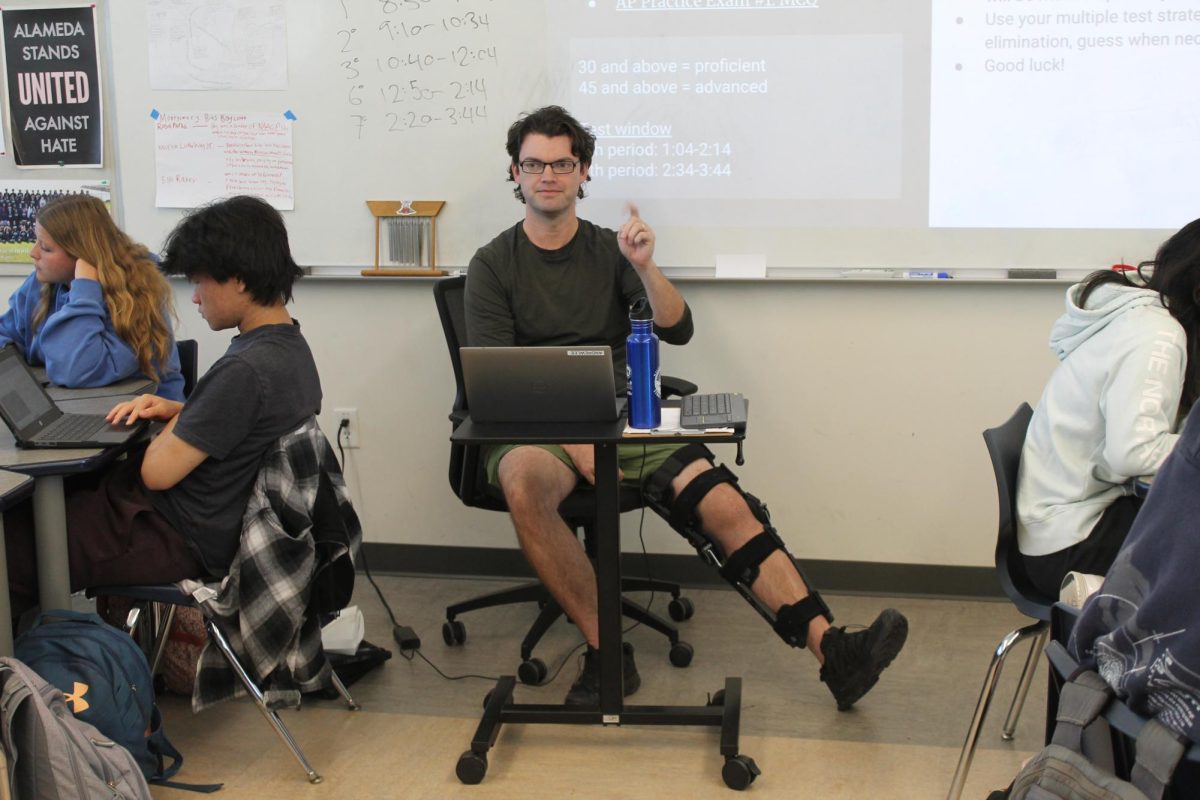
Maxwell Mueller uses the elevator to navigate. (Luisa Ruelos)
Freshman Koli Jones, who suffered an ACL tear in a skiing accident said, “The elevator was okay, but I always had to ask someone to open it for me.”
Another concern with Encinal’s campus accessibility is the handicap parking. There are only two spots at the front of the school for an at-times overwhelming amount of injured students. The parking lot is small and often overflowing which makes it difficult for the parents of injured students to pick them up and drop them off. This is amplified if students end their day with a class that is far from the front of the school. The other option for these families is to pick up students on 3rd street, yet this is busy and is the site of occasional car accidents.
Injuries are hard to manage and at times it can be hard to navigate school all day when a body part is impaired. Independent study is an option if students would like to take school from home while recovering. Students are allotted 15 independent study days a year as long as it is within 3 weeks of the school year ending. If students contact the office they will receive a form for them and their guardians to fill out, as well as a page for teachers to fill out and list assignments students need to complete while taking the independent study. Students with good academic standing, no attendance issues, and no prior incomplete contracted study opportunities have the opportunity to take independent study. If students choose to take the opportunity they have a responsibility to complete any work they’re assigned when it’s due and follow the AUSD disciplinary code and behavior guidelines. If students need more than 15 days for recovery they have the opportunity to inquire about having a teacher teach them at home. Although, there aren’t many teachers that AUSD has the ability to send.
Encinal’s procedures towards students with temporary disabilities may accurately meet the requirements provided by law, but it still leaves something more to be desired in terms of ensuring students’ care.
