




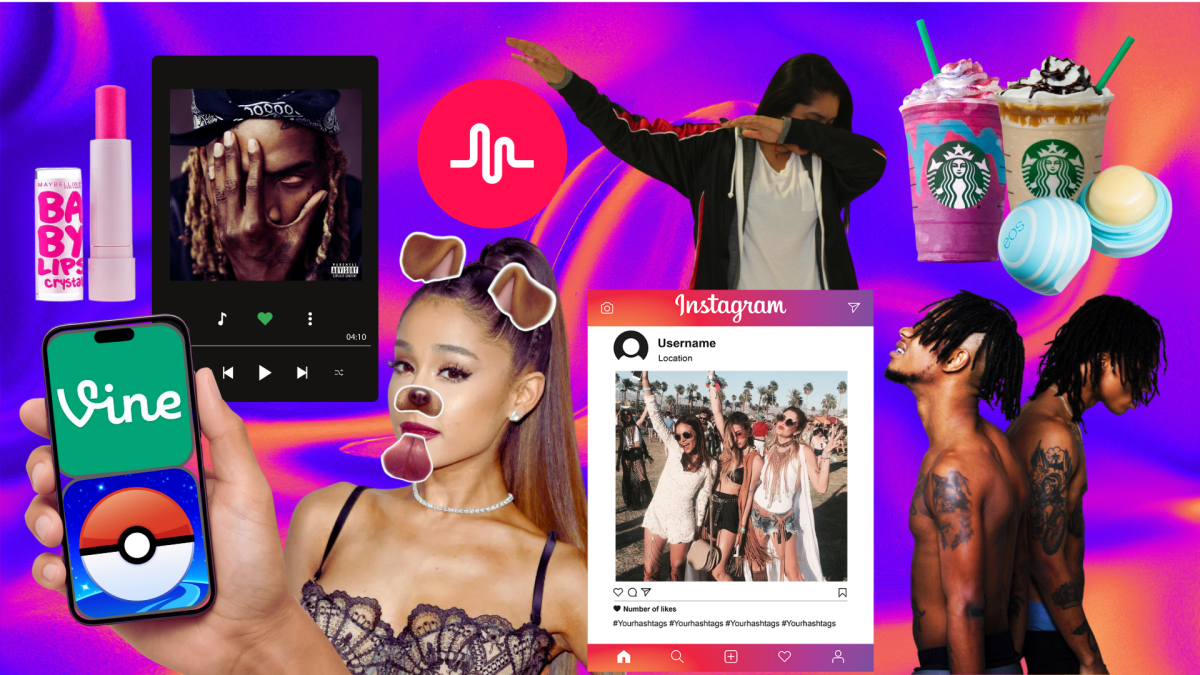
It’s officially 2016–just a decade later. The era has taken over social media late 2025 to early 2026. Driven by nostalgia for its pop music, chaotic fashion, and playful internet culture. But why is this era being revived so soon?
The nostalgia trend
According to ABC News, social media users have sparked a viral wave of nostalgia. Flooding TikTok and Instagram with posts celebrating 2016. The year of 2016 was before the Covid-19 pandemic and artificial intelligence takeoff. Former Vogue editor, Leah Faye Cooper, told ABC News that many are drawn to 2016 because “they’re longing for a time that felt simpler,” suggesting the era’s freedom is missed. Social media has enabled users to revive the music, fashion, and internet aesthetics of a decade ago.
Forbes reported that TikTok and Instagram are the center of the “2026 is the new 2016 trend” making the period’s revival widespread.
Trend breakdown
The nostalgia surrounding 2016 isn’t just a random throwback fun, it is a shared culture of music and pop culture that many remember fondly.
“I’m really happy 2016 is coming back because I really like the music,” said junior Ian Madsen.
The year consisted of much Pop, R&B, EDM, and Rap music success. Reported by Rolling Stone, people are nostalgic for “2016 – the year of huge albums from Rihanna, Drake, Kanye West, and Frank Ocean – because we miss our shared culture.” The internet culture of 2016 was highly memorable due to its simplicity and for its less algorithm driven feed. Instagram followed a more chronological feed, viral trends like the bottle flip challenge grew organically, and snapchat was less performative and used mainly for its famous dog filter.
Social media marketer, Kar Brulhart, told Business Insider, “There was far less curation, and people weren’t trying to brand themselves with every post. They were documenting life as it happened, not worrying about the likes or engagement.” The internet culture was more authentic, which explains why people are nostalgic for it now.
Partying with nostalgia
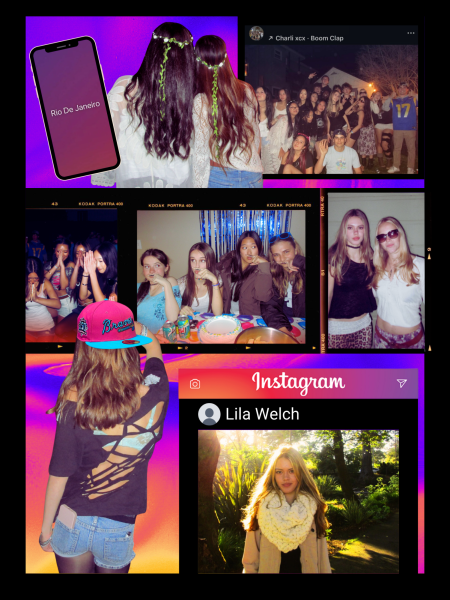
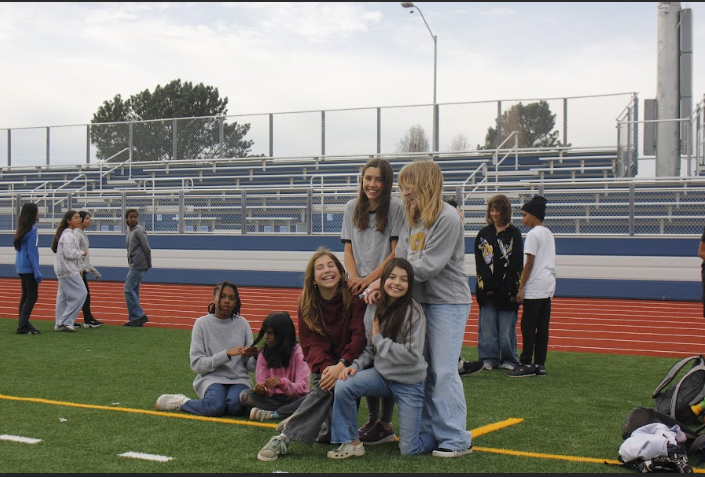
Encinal High School sophomore student Lila Welch, turned the nostalgia into a real-life celebration, throwing a 2016 themed birthday party in January.
“I decided to throw a 2016 themed party because I turned 16 years old in 2026, so I wanted to go back a decade.” Welch said.
A playlist consisting of 2016 pop music was played throughout the party featuring artists like Lorde, The Chainsmokers, Mac Miller, Fetty Wap, and Lil Uzi Vert. The house was filled with colorful streamers and lights on walls, reminiscent of early Instagram aesthetics for guests to pose for pictures.
“A lot of people at my party posted on their instagrams with the ‘Rio de Janeiro’ filter,” Welch said. “[It] was really popular in 2016 because it was a very colorful year.”
The themes of “2016 Coachella” and “2016 swag era”, were displayed by the clothes the attendees wore. Guests dressed in lace tops, cut-out back shirts, ripped shorts/jeans, patterned skirts, graphic t-shirts, and boots. Many also accessorized with flower crows, chokers, baseball caps, layered necklaces, and colorful sunglasses. The party was successful in delivering the 2016 nostalgia and fun for many guests.
“The party was really fun and it brought me back to what I would have thought a high school party would’ve been like as a teenager in 2016,” sophomore Lauren Huynh said.
The bigger picture
Welch’s party demonstrated how the trend moved outside of social media and into real-life. The main revivers of this era are the teenagers of 2026, who were children during 2016. The trend’s movement allows teens to relive what it might’ve been like to be a teenager during the time. The party’s nostalgic theme was far more than just a throwback, it was more so a time to be alive.
“It’s fun to step into 2016 for a night, because everyone associates [it] with a carefree energy you want to relive.” Said sophomore Camila Padilla La Torre, who also attended Welch’s party.
Although trends are seen as a fun time to relive, some opinions differ. The 2016 nostalgia trend could be viewed as one of those fads.
“I feel like they are forcing nostalgia out of something that died 10 years ago for a reason,” said freshman Stephan Dumont.
Social media trends are known to go out of fashion, but the 2016 nostalgia trend has unlocked an emotional connection. Forbes noted that economic uncertainty, technology rapidly growing, and political instability have helped fuel the 2016 nostalgia trend. Experts say that, in moments of collective stress, “audiences instinctively look backward to familiar cultural touch points that feel safer and more predictable.”
The 2016 trend is like many others that follow a similar pattern of nostalgia uprising when change happens rapidly. The trend serves as a way for people to connect to a time that feels more comfortable to them.
“As far as I’m concerned, 2016 was only 10 years ago and it’s a little soon,” said Encinal substitute teacher Dominic Carrion.
How long the trend will last is up to those who are still able to find an emotional connection to the era. The 2016 nostalgia trend exploding on social media and now into real-life like Welch’s party, shows no sign of ending anytime soon.
To find out where the information was retrieved from, visit: Forbes, 2nd Forbes source, ABC News, Rolling Stone, Business Insider
Pharell • Mar 15, 2026 at 1:17 pm
Awesome article! Great insights to the latest trends going on in the Bay!