









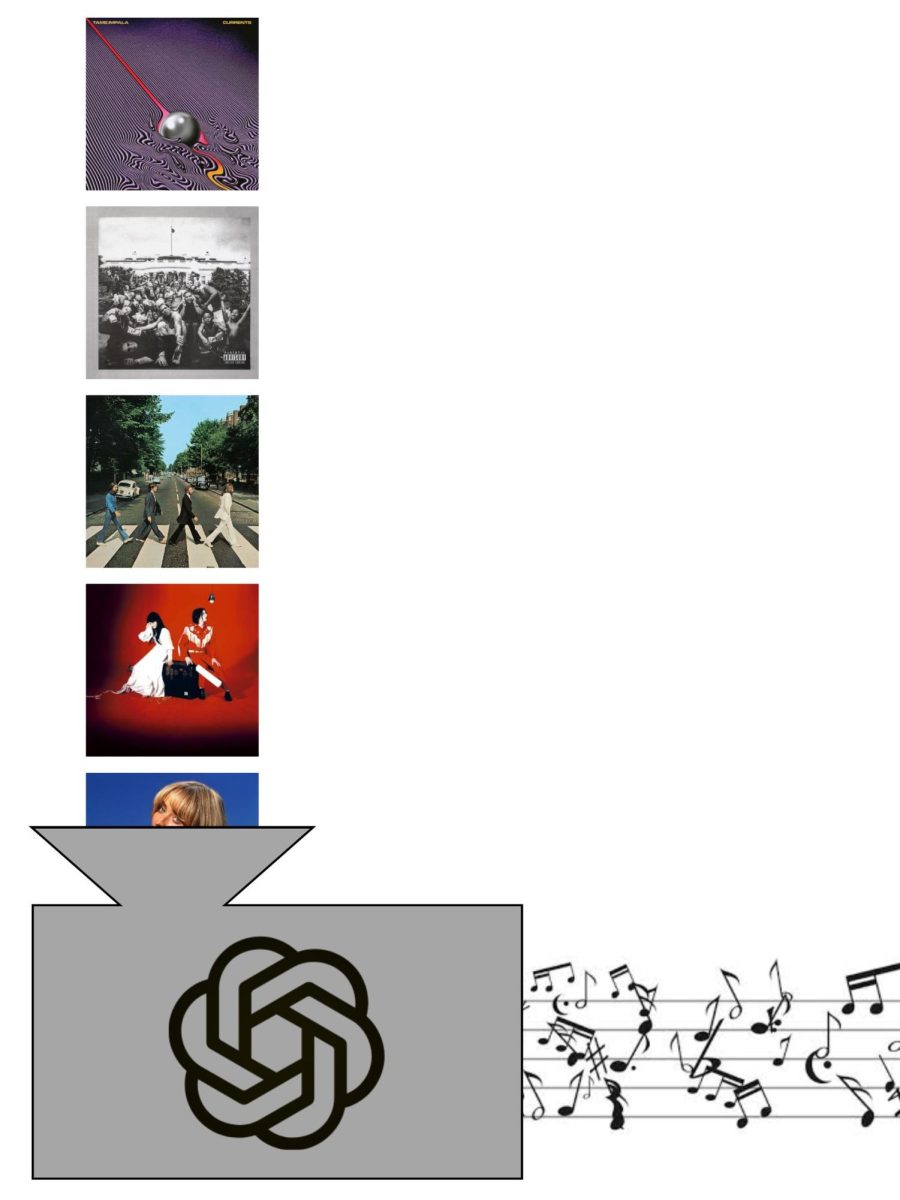














The use of AI technologies has grown rapidly in the past few years, largely because of how easily tasks can be completed with them. Its popularity has especially increased among students. According to Professor D. Mulford of Campbell University, “A global survey by the Digital Education Council found that 86% of students use AI in their studies.”
At Encinal High School, the use of AI is found in many classrooms, supporting studies such as the one conducted by Mulford. When students were asked whether they used AI technologies and how often, their answers were similar and showed how drastically using AI has affected their work ethic.
“Probably like every day,” said an anonymous freshman, who added that they use AI for much of their math work.
Similarly, a sophomore who wished to remain anonymous said, “I use [AI] pretty often. I use it for a lot of my writing assignments.”
Many students expressed they thought using AI for their work was acceptable under the right conditions, even though it is usually against the rules in their classes.
“If you’re trying to get a good grade and it’s not really an important assignment, I think it’s okay,” said an anonymous sophomore. Another added, “I think there’s definitely workarounds… You could definitely use it for some things.”
The school’s honor code, found in its student handbook defines plagiarism as “the representation of another’s ideas, thoughts, words, or images as one’s own, regardless of intent.” However, there is no specific policy regarding use of artificial intelligence.
Although many students view AI as a workaround to save time on their studies, several said it has actually affected how they learn and go about their work.
“It will make me lazier to the point where I’ll be like, do I really want to do this,” said another sophomore when asked how AI had affected their learning. “Or do I just want to use ChatGPT to find the answer?”
Students said AI has not only lowered their motivation and ability to retain information but has also changed their classroom experiences. Because so many students use AI in their schoolwork, some teachers have put measures in place to limit AI usage. For example, in a sophomore English class, students were made to write their essays by hand, and when they were finished, they typed their essays into a google form to prevent AI-assisted cheating. Students complained of hand cramps, the amount of time it took, and the inability to use proper formatting in the form. Despite these concerns, their teacher said the policy served an important purpose.
“I fear that… for some students, this might be the first time they have actually sat down and written more than a few sentences themselves, and their complaints are coming from a place of fear: fear that they don’t actually have the skills to write themselves,” English teacher Ms. Calahane said. “I learn a lot about my students through their voices as writers… I will keep fighting to find ways to not lose that to the sterile blandness of AI.”
Even as teachers tighten their AI policies, some students say they have noticed inconsistency in staff behavior. In one classroom, a teacher was seen using ChatGPT to answer a student’s question. And in an interview, sophomore biology teacher Dr. Boone acknowledged his own use of AI.
“I’ve only used [AI] to create content, for what I might call supplemental content, like presentations,” Boone said.
Even though most students use AI for some aspect of their schoolwork, many said they feel guilty about it and believe it has been harmful to their education.
“I think it’s disappointing, and it really shows where we are as a community,” said an anonymous sophomore. “I think when it gets to the point when you rely on it, it’s harmful to students’ education.”