




















In March 2025, Encinal High School’s AP Biology class dove into biotechnology with a six-day lab that brought genetic engineering to life. Over the course of the experiment, students successfully inserted fluorescent protein genes into bacteria—causing them to glow pink under the right conditions. The petri dishes lit up with evidence of their success, sparking excitement and a deeper curiosity about the power of modern biotechnology.
Encinal’s AP Biology class conducted an advanced lab experiment using materials provided by AMGEN Inc., a California-based biotechnology and pharmaceutical company. The company lent the class essential tools and supplies—including micropipettes, E. coli cells (non-pathogenic), and the genes used in the experiment—which allowed students to engage with professional-grade biotechnology equipment.
Through hands-on experience, students practiced college-level laboratory techniques such as micropipetting, gel electrophoresis, and petri dish incubation. For many, it was their first time working with specialized tools.


“Biotech equipment and labs can be intimidating to students, as they typically haven’t used this kind of equipment before. However, this equipment is extremely common in college-level research. I believe that exposing students to these techniques in high school increases the likelihood that they will feel comfortable joining research labs in the future. My goal is to help our students build the confidence to pursue science.”, Julia Olszewski-Jubelirer Ap Biology Teacher.
Lab procedures
To kick off the lab, Encinal students began by practicing their micropipetting skills—carefully transferring colored dyes into different vials and loading them into gel wells. This hands-on exercise prepared them for a key biotechnology technique: gel electrophoresis.
Gel electrophoresis is used to separate charged molecules, such as DNA, by size and charge. When an electric current is applied, DNA fragments move through a porous gel. Smaller fragments travel farther and faster than larger ones, allowing for clear separation. Students compared their results to a reference stain pattern to confirm whether their plasmids—the circular DNA molecules carrying specific genes—were the correct size. Success meant the genes for antibiotic resistance and a pink fluorescent protein were present and ready for the next phase.
With their genetic material confirmed, students moved on to bacterial transformation, the process of inserting genes into bacteria. The E. coli strains used in the lab were specially treated to be non-pathogenic and completely safe for classroom use. To introduce the plasmids, students used a heat-shock method: briefly exposing the bacteria to high temperatures to open the cell membranes, then rapidly cooling them to seal the new genes inside.
The transformed bacteria were then placed onto three separate petri dishes, each designed to test how the bacteria responded to different conditions. All dishes contained a nutrient-rich gel to feed the bacteria. Half of dish #1 and dish #3 contained ampicillin, an antibiotic which damages the cell walls of bacteria, causing them to burst. Dish #3 was the only dish that contained arabinose, a sugar necessary for the production of the pink protein encoded by the genes on the plasmid.
- Dish #1: contained ampicillin and was inoculated with half plasmid + (transformed) and half plasmid – (untransformed) .
- Dish #2: contained no arabinose, and no ampicillin antibiotic, with half plasmid + (treated) and half plasmid – (untreated)
- Dish #3: contained transformed bacteria, ampicillin, and arabinose.
All samples were incubated under the same conditions for 24 hours.
The results were a clear demonstration of successful genetic engineering. As expected, Dish #1 showed growth in the transformed bacteria & no growth in the untransformed bacteria—the untransformed bacteria lacked antibiotic resistance and were eliminated by the ampicillin. Dish #2 showed bacterial growth in both treated and untreated bacteria; in the absence of an antibiotic all bacteria could grow. Without arabinose, the pink protein gene wasn’t activated, resulting in white bacterial colonies. Dish #3 stole the spotlight: the bacteria not only survived due to antibiotic resistance but also expressed the pink protein, glowing brightly under lab lights—illuminating the success that excited the entire class.
Teacher Spotlight
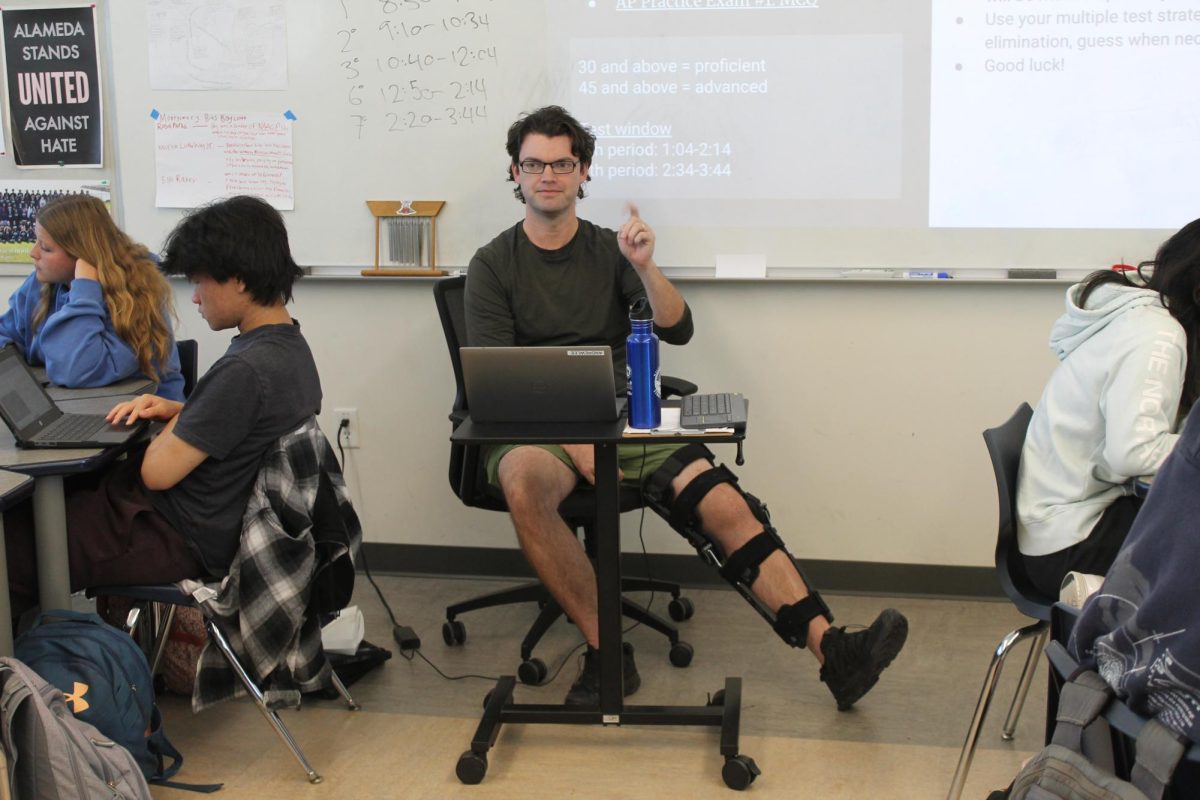
This year, Encinal Jr./Sr. High School welcomed a new addition to its science department: Julia Olszewski-Jubelirer, known to many students as Ms. OJ. She currently teaches Biology, AP Biology, and now Marine Biology, bringing a clear passion and enthusiasm for the sciences to her classrooms.
“My name is Ms. OJ. This is my first year teaching at Encinal and my seventh year teaching high school biology. I love teaching biology and am especially passionate about doing experiments that help students see themselves as scientists. I grew up in Arizona and have lived in a total of five states across the country. In my free time, I take care of my two-year-old twins and my dog, Toby.”, Ms OJ
Since Ms. OJ began teaching at Encinal, interest in advanced science courses has surged. For the 2025–2026 academic year, the school has seen a remarkable over 500% increase in AP Biology enrollment, prompting the addition of three new class periods—quadrupling the number previously offered.
“I really like Ms OJ, she’s a really nice teacher and I felt I learned a lot in her Biology class this year“, Sophomore Biology student Kaylee Garcia
Encinal is fortunate to have an educator whose dedication and teaching style inspires so many students to pursue more rigorous academic opportunities.